

Checklist
When buying clothing and other textile products, take into account various, yet common tolerances and quality aspects. For a good offer and delivery of the right quality, the most important question is to identify what the customer's wishes are and what requirements the clothing must meet. Workwear will normally have to meet different requirements than clothing for promotional use
Material
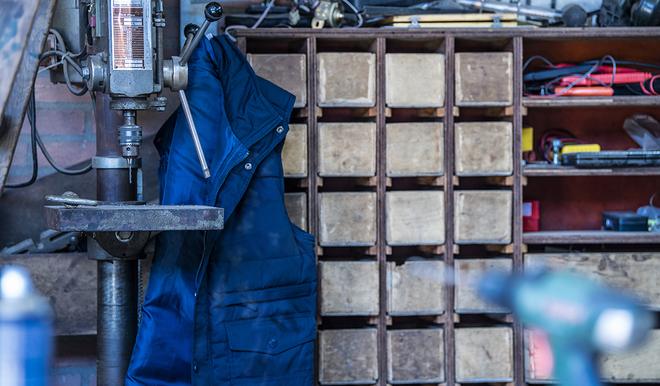
As textiles usually have natural raw materials as their base, a constant product is virtually impossible. Despite all highly advanced manufacturing techniques, there will always be differences between one part fabric and another. If they come from the same batch, the differences are usually minimal. Often the differences are more noticeable with materials from different batches. For woven fabrics, smaller tolerances can be taken into account than for knitted fabrics. Knitted fabrics have more stretch and a tolerance of approx. 2 cm on the width and length should therefore be taken into account..
Washing
The dirtier the fabric , the more intensive washing is required. This always comes at the expense of the fabric. The heavier the washing process, the greater the attack on the fabric. If you want it to last longer, you can do so by not letting the fabric get too dirty , whereby a light washing process is then usually sufficient and extends the life of the fabric.
Sizes
Confection remains human work. Making textiles is about different product lines with different people. Despite an exact specification and close control, differences will always remain. To this day, different manufacturers still work with often different size definitions. So one brand's size medium may differ from another brand, it may fall wider or smaller.
COLOR
The use of natural raw materials also affects the consistent quality of colours. Despite computer-controlled colour recognition and mixing according to exactly identical formulas, the colour may differ when dyed in different colour baths. These differences are particularly noticeable if different pieces of textile are held against each other.
Shrinkage
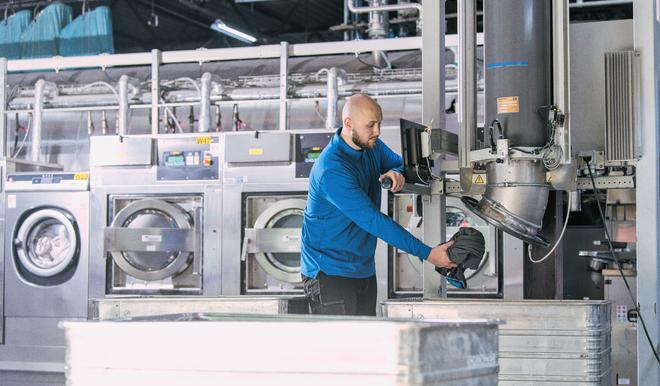
A widespread misconception is that there are tissues that do not shrink. All fabrics/knits shrink! However, the degree to which they shrink depends on several factors, including the fabric manufacture. There are different forms of shrinkage. Initial shrinkage occurs during the first wash. During production, tension builds up in the fabric. During washing, this tension is released, causing shrinkage. Progressive shrinkage is shrinkage that occurs after several washing or drying treatments. Shrinkage cannot be 100% prevented, but it can be limited.
Print and embroidery
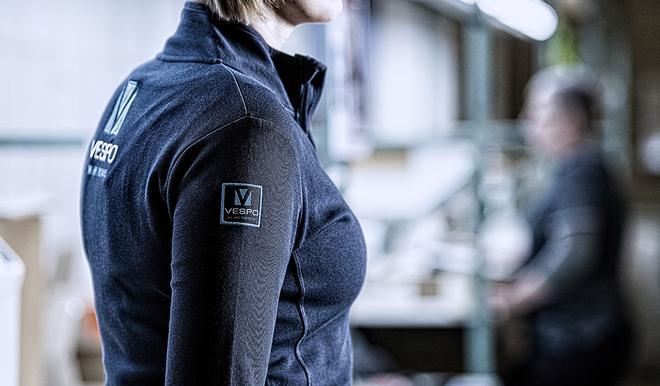
Screen printing on textiles is a speciality. The different textures and colours of the substrate can minimally affect the look of the print. The same print on tricot, pique or nylon printed will often give a different result.
An embroidery gives your product a luxurious and exclusive look. When embroidering your product, however, you need to take into account the limitations of the production technique. The minimum thread thickness and the needles used limit the fineness of details. As with printing, the surface determines the end result of your embroidery; a flat surface gives a nicer end result than a coarser surface. To embroider, the item must be able to be clamped, not every location is equally easy to clamp or reach. The thickness of the fabric or haberdashery and accessories can also cause problems. So keep in mind that the location of your logo cannot be determined down to the millimetre. For more information and advice, please contact one of our dealers or advisors.
Dyeing textiles
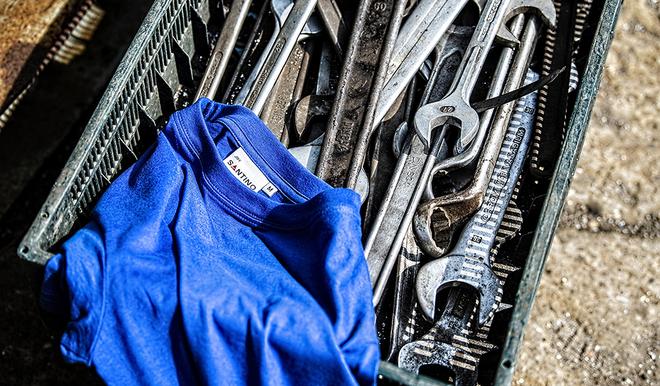
Colours are built up in different ways, in paint according to a certain recipe, in a printer with toner or ink (CMYK) on a screen with pixels.
Colour authenticity
It means the extent to which the colour is retained under a variety of conditions such as light, perspiration, rubbing, chloring and washing.
More or less quantities for Custom Choice orders
All Custom Choice orders we supply are not delivered from stock but are specially produced to order for the customer. As with any other production process, be it a pencil, bread or textile, there will be production breakdowns. The drop-out can be caused by various reasons, e.g. yarn rejection, knit errors, not properly dyed in, cutting losses, misprints, tolerance differences etc, etc. A production order therefore starts with the amount of raw material needed for the requested quantities as well as the average amount of expected rejects (to compensate for rejects during production). Depending on the amount of actual rejects, more or less will be delivered than ordered.
The more-minor ratio for orders with small quantities is normally 10% , for large quantities it will be ca.5%. Of course we prefer to deliver more than less but as soon as fabrics/goods do not meet our quality requirements they will still be rejected by us....
For dyeing fabrics, Pantone TCX colour references are normally used, unfortunately most companies do not have Pantone TCX but only PMS colour references. Pantone PMS colour references are print colours, which cannot be compared to TCX colours, especially the Pantone PMS C(oated) version, which cannot be compared at all because fabrics cannot be coated with the same gloss, so we try to match the PMS reference as closely as possible. In the factory laboratory, the colour sample is compared, by means of a photo spectrum meter and visually, with the colour reference before it is sent to the customer. As a fabric colour and Pantone PMS print colour are difficult to compare, there will usually be a certain percentage difference, which is why we often send multiple colour samples.
Additional information Custom Choice

Methodology
Read more about how we work, how a design and quote are created, but most of all what you can expect from us.

lead times
Click here for an indication of delivery times for Custom Choice items.

Own corporate identity
Custom Choice items can be created entirely according to your wishes.

Checklist
Take into account different, yet common tolerances and quality aspects in your requests.